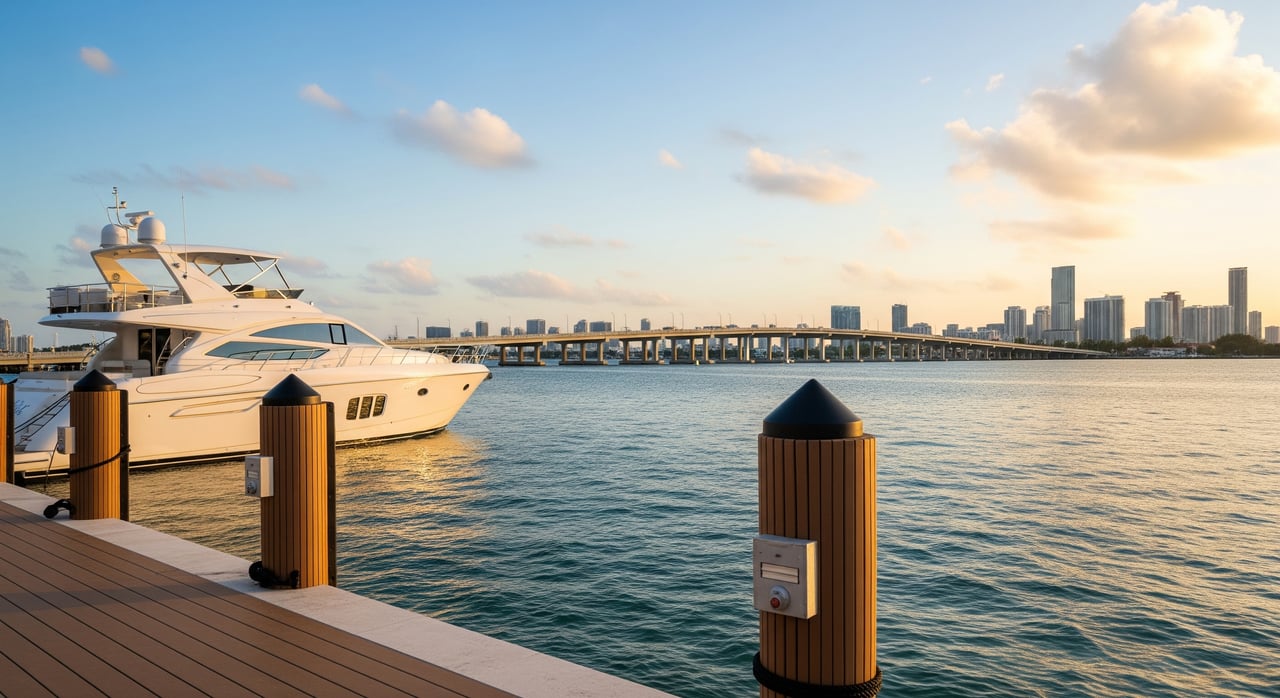
Your boat is only as useful as the water under it and the bridges above it. If you are comparing Key Biscayne homes, dockage and access to the Atlantic are just as important as square footage. In this guide, you will learn how local channels, bridge clearances, tides, rules, and marina options shape daily boating and property value. Let’s dive in.
How Key Biscayne waters work
Biscayne Bay around Key Biscayne mixes shallow flats with marked, maintained channels. Those channels offer reliable routes, while nearby flats and shoals can be shallow and shift after storms. Many private docks sit in shallower water than the channels, so route planning and vessel size matter.
You should always base decisions on official sources. Use current NOAA nautical charts and recent U.S. Coast Guard Local Notice to Mariners to confirm aids to navigation, channel conditions, and any temporary restrictions. Check tidal height to fine‑tune safe depth and bridge clearance, using NOAA Tides & Currents for timing.
Simple terms you will use
- MLLW/MLW: The chart datum used on NOAA charts to reference depth. You add the tide height to this number to estimate water under your keel.
- Draft: How deep your boat sits in the water from the waterline to the lowest point.
- Beam: The widest part of your boat. It matters for slips, fairways, and turning room.
- Air draft: Height from the waterline to the highest fixed point on your boat. Compare to bridge clearances.
- Controlling depth: The shallowest point along a channel that controls safe passage.
- Under‑keel clearance: The safety buffer between your keel and the bottom to account for chop, squat, and tide changes.
Bridges and routes to the Atlantic
The Rickenbacker Causeway is the primary land link to Key Biscayne. For boaters, the key question is whether any fixed spans or drawbridges affect your air draft on the route you plan to use. Always confirm bridge vertical clearances and any temporary work on the U.S. Coast Guard Local Notice to Mariners, then validate on NOAA charts before you go.
You can reach the open Atlantic from Biscayne Bay through marked passes and channels. Your route choice affects distance to deep water, weather exposure, and suitability for your boat’s size. If you run a taller vessel, verify clearances; if you run a deeper draft, confirm the controlling depths along the entire approach.
Tips for planning your route:
- Identify the nearest marked channel from your dock and measure the transit distance.
- Compare your draft and air draft to charted depths and posted bridge clearances.
- Recheck conditions after major storms in case of shoaling or temporary restrictions.
Dockage on and near Key Biscayne
You will find a mix of private docks, condo/community slips, moorings, and public facilities on and near the island. Private single‑family docks range from fixed finger piers to floating systems, with depth, utilities, and turning space varying by lot and shoreline conditions. Condo slips follow association rules and assigned lengths and beams.
Public options include on‑island park facilities that serve recreational boaters. The Crandon Park area and its marina provide launch, limited transient options, and basic services; verify current details with Miami‑Dade County Parks. At the south end of the island, Bill Baggs Cape Florida State Park offers shoreline access and small‑craft landing areas; check rules and availability with Florida State Parks.
For larger vessels, full‑service marinas with haul‑out and long‑term yacht berths are more common off‑island on the Miami mainland, including Coconut Grove and other Biscayne Bay neighborhoods. Many buyers keep a shallow‑draft day boat at home and berth a larger yacht at a full‑service facility.
Rules, permits and environmental factors
Dock construction and modifications typically involve multiple jurisdictions. Local permits are handled by the City of Key Biscayne and Miami‑Dade County. Environmental reviews may involve county and state agencies, and some work requires federal authorization.
- Local: Building permits, zoning, and shoreline rules are administered by the city and county. Start at the City of Key Biscayne and Miami‑Dade County Environmental Resources Management for process and compliance.
- State: Many shoreline and dock projects require review by the Florida Department of Environmental Protection for coastal and environmental resource permits.
- Federal: Work that affects navigable waters can trigger U.S. Army Corps of Engineers review. The Jacksonville District provides guidance at the U.S. Army Corps of Engineers Jacksonville District.
On‑water rules combine state law and local ordinances. The Florida Fish and Wildlife Conservation Commission sets statewide boating rules and enforces manatee and wildlife protections. Miami‑Dade and Key Biscayne post restricted speed, idle‑speed, and no‑wake zones near shorelines, marinas, swim areas, and sensitive habitats; always follow local signage and official maps.
Environmental protections are a key part of ownership and daily use. Seagrass beds and mangroves are protected, so prop scarring and wake damage can lead to penalties and costly remediation. Expect enforcement from FWC, county marine patrols, and park rangers.
What this means for your boat and home search
Vessel size affects property fit more than many buyers expect. Many on‑island docks are best suited to shallow‑draft center consoles and sport boats, while deeper‑draft yachts often require off‑island berths. Air draft matters where bridges or overhead lines are present near your route.
Daily usability is driven by proximity to a marked channel and the time to reach open water. Quick access reduces transit time, improves safety margins in changing weather, and increases how often you will use the boat. Protected but shallow locations favor kayaks and small craft but can limit larger vessels.
From a property value standpoint, a functional, permitted dock that fits your boat is a real premium. The ability to confirm permits and, where allowed, plan upgrades with predictable timelines adds certainty. Insurance underwriters will also look at seawall condition, pile ratings, flood exposure, and hurricane planning.
Smart buyer checklist
Use this practical checklist to compare homes and slips:
- Identify the exact route from the dock to the nearest marked, maintained channel; estimate transit time to the Atlantic.
- Verify charted depths at the dock and along the route at datum using NOAA nautical charts, then add average tide height from NOAA Tides & Currents.
- Confirm any bridge or overhead clearances on your intended route on the Local Notice to Mariners and on the chart.
- Measure dock dimensions: slip length (LOA), beam limits, turning room, and controlling depth at low water.
- Check utilities at the dock: shore power (voltage/amp), potable water, pumpout, and fueling options nearby.
- Review speed and wake zones, manatee areas, and local anchoring limits via FWC boating resources.
- Pull permit history and compliance: city/county building approvals, recorded covenants or HOA rules, and any environmental conditions at Miami‑Dade ERM and the City of Key Biscayne.
- For planned modifications, consult Florida DEP and the U.S. Army Corps of Engineers Jacksonville District for applicability and timelines.
- Obtain insurance quotes for the dock and vessel that reflect local wind, flood, and hurricane requirements.
- Commission inspections: marine contractor for dock and piles, engineered seawall review, and a marine surveyor for your boat.
When to choose a marina vs. a private dock
Choose a private dock if your boat’s draft and beam fit comfortably, you have a short run to a marked channel, and you can secure insurance and a hurricane plan. This setup maximizes spontaneity for day trips and sunset runs. It also adds lifestyle value to your home.
Choose a full‑service marina if your boat is larger, requires haul‑out, or needs deeper water and more robust amenities. Many Key Biscayne owners keep a smaller boat at home for quick outings and reserve a berth off‑island for a larger yacht. That hybrid approach balances convenience with safety and service access.
Work with a waterfront‑savvy advisor
A great waterfront decision blends lifestyle with technical due diligence. You deserve a guide who understands permits, seawalls, channel approaches, and how these details affect value and daily use. Innovatio Realty Group pairs real estate expertise with technical insight so you can buy with confidence and enjoy the water from day one.
If you are weighing homes with docks or evaluating marina access, let’s build a plan around your vessel and your goals. Schedule a private Real Estate Strategy Session with Katerina Bucciarelli.
FAQs
Can I keep my boat at a private Key Biscayne dock?
- Often yes for small to medium recreational boats, but you should verify depth at low tide, dock dimensions, permit status, and any association rules before you buy.
What boat size fits typical on‑island docks in Key Biscayne?
- Many docks suit center consoles and sport boats; larger yachts frequently berth off‑island at full‑service marinas due to draft, length, and turning room needs.
Do bridges limit access from Key Biscayne to the ocean?
- Key Biscayne has access via marked channels, but you should confirm air draft limits and any temporary restrictions using NOAA charts and the Local Notice to Mariners.
Who enforces wake zones and speed rules near Key Biscayne?
- The Florida Fish and Wildlife Conservation Commission, Miami‑Dade marine patrol, and park rangers enforce posted zones, with fines for violations.
What permits are required to build or modify a dock in Key Biscayne?
- Expect local building approvals with the city and county, state review by Florida DEP, and in some cases U.S. Army Corps authorization; start early and verify requirements with each agency.