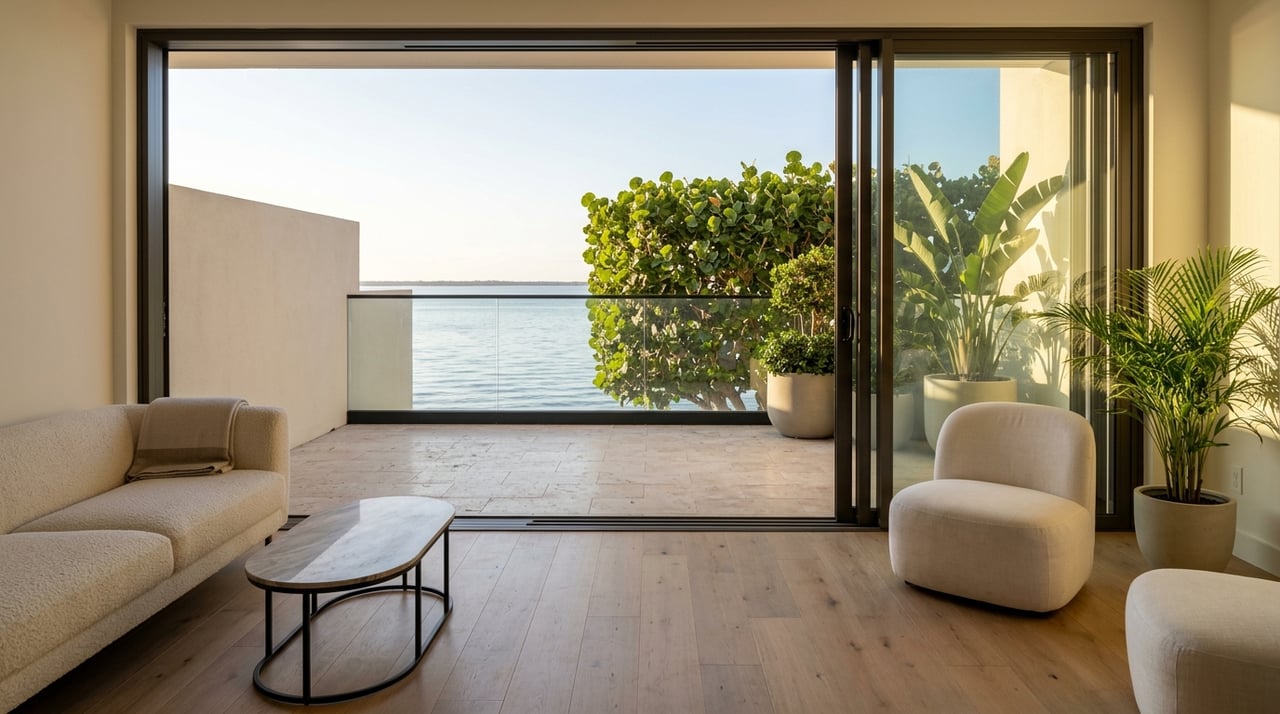
If you are choosing waterfront living in Miami Beach, the shoreline matters more than many buyers expect. Oceanfront and bayfront can both deliver beautiful water views, but they support very different daily routines, mobility patterns, and ownership considerations. If you want to narrow your search with more confidence, this guide will help you compare the two and focus on what fits your goals best. Let’s dive in.
Oceanfront vs Bayfront Basics
Miami Beach sits between the Atlantic Ocean and Biscayne Bay, with more than 7 miles of sandy beaches along the east side. In simple terms, oceanfront homes and condos face the Atlantic, while bayfront properties face Biscayne Bay and the mainland side.
That distinction is not just visual. The city treats oceanfront and bayfront as different waterfront conditions, with design guidance that protects view, light, and breeze corridors to each shoreline. For you as a buyer or owner, that means the side of the island you choose can shape everything from your morning routine to long-term livability.
Why Oceanfront Appeals to Buyers
If your ideal Miami Beach lifestyle starts with sand, sunrise, and a direct path to the water, oceanfront may feel like the obvious fit. This side of the island is closely tied to the beach system and the city’s public beachfront experience.
The Miami Beach Beachwalk is a 9-mile oceanfront promenade that stays open 24 hours. The city also promotes recreation along its 7-mile beach stretch, supported by lifeguards and beach-condition advisories. For many buyers, that creates an easy rhythm of walking, jogging, swimming, and spending time outdoors without needing a car.
Oceanfront Lifestyle and Energy
Oceanfront living usually feels more active and public-facing. Miami Beach recorded 5.4 million overnight visitors in fiscal year 2024 and has 21,065 hotel rooms, which helps explain why the beachfront corridor often has a more animated atmosphere.
That does not mean every oceanfront building feels busy all the time. It does mean you should expect a shoreline that is more programmed, more visited, and more connected to the city’s recreation and hospitality economy.
Oceanfront Is Best for Beach Rituals
If your priority is direct beach access, oceanfront stands out. You can step into a lifestyle built around morning walks, ocean swims, and easy access to the public beach side.
The tradeoff is that the ocean side is not designed around private boating. The city notes that boating traffic is restricted by swim buoys along the beach, reinforcing that this shoreline is optimized for swimming and beach use first.
Why Bayfront Appeals to Buyers
Bayfront offers a different kind of waterfront experience. Instead of beach activity, it is more closely tied to marinas, Baywalk segments, and bay-crossing mobility.
For many buyers, this side of Miami Beach feels more practical for everyday waterfront living. That is not an official city label, but it reflects the infrastructure pattern, pedestrian routes, and marine access associated with the bay side.
Bayfront Strengths for Boating
If you own a boat or want convenient marine access, bayfront is the stronger choice. The Miami Beach Marina sits near Government Cut, offers deep water, has no fixed bridges, and includes 400 slips for vessels up to 250 feet.
That kind of access matters because it can shape how often you actually use the water. For boating-oriented buyers, the bay side supports a lifestyle that is harder to replicate on the oceanfront.
Bayfront Mobility and Connectivity
Bayfront also benefits from water-based and pedestrian-first mobility. The city operates a free commuter water taxi between Maurice Gibb Memorial Park in Miami Beach and Venetian Marina & Yacht Club in Miami.
On land, Baywalk and Marina Baywalk improvements support walking and nonmotorized transportation along the bayfront. If you value practical movement, marina access, and an easier link to bay-crossing routes, bayfront deserves a close look.
How the Daily Feel Differs
The simplest way to compare these two settings is to think about your day from morning to night. Oceanfront tends to center on beach access and a more energetic waterfront setting. Bayfront tends to center on boating, pedestrian marina spaces, and a more functional day-to-day waterfront pattern.
If you picture yourself using the shoreline every day, ask what that actually means. Do you want to walk the beach and hear the ocean, or do you want marina access, bay views, and water transportation options?
Ownership Risks Matter on Both Sides
A waterfront address is only part of the decision. In Miami Beach, long-term ownership costs and building condition can matter just as much as whether the unit faces the ocean or the bay.
The city notes that the island’s low elevation can lead to drainage issues and flooding from heavy rainfall, high tides, and storm surge. In July 2025, Miami Beach adopted a Sea Level Rise Adaptation Plan, which underscores how important resilience and infrastructure are to any waterfront purchase.
Condo Building Health Is Critical
For condo buyers, Florida’s current requirements around milestone inspections and structural integrity reserve studies can affect financing, special assessments, and resale confidence in many condominium and cooperative buildings that are 3 stories or taller.
That means you should not treat all oceanfront or bayfront buildings as equal. A well-positioned unit in a strong building may prove more attractive over time than a more dramatic waterfront location in a property with weaker fundamentals.
The Best Unit Is Not Always Closest
In Miami Beach, the smartest buy is not always the one nearest the water. A better long-term fit may come from the right combination of view plane, building condition, flood profile, and association health.
That is especially important because city guidance shows different design and infrastructure responses along each shoreline. Oceanfront areas involve dune landscape planning and protected view considerations, while bayfront corridors such as West Avenue show how road elevation, stormwater improvements, and Baywalk upgrades can influence livability.
What the Market Context Tells You
The broader Miami Beach and Barrier Islands market gives useful context, even though oceanfront and bayfront do not trade as one uniform category. According to Miller Samuel for Q4 2025, the market reported a median sales price of $745,000, an average sales price of $1,944,106, an average price per square foot of $1,185, 132 days on market, and 4,228 listings.
At the high end, the top 10 percent of condo sales had a median sales price of $5,137,500. For luxury buyers and sellers, that reinforces an important point: view quality, building age, condition, and association strength can influence value as much as the shoreline label itself.
A Simple Decision Framework
If you are deciding between oceanfront and bayfront, use these questions to clarify your priorities:
- Do you want direct access to the beach, or do you want better boating access?
- Do you prefer a more public-facing waterfront setting, or a marina-oriented one?
- Will you use walking promenades more often on the ocean side, or water taxi and marina access on the bay side?
- Are you buying for personal lifestyle, long-term hold, seasonal use, or resale flexibility?
- How strong is the building’s condition, reserve planning, and overall ownership profile?
Choose Oceanfront If You Want
- Direct beach access and ocean swimming
- A lifestyle centered on Beachwalk and the public beach system
- An energetic waterfront setting
- Sunrise-facing views and a stronger beach-driven daily routine
Choose Bayfront If You Want
- Better boating access and marina convenience
- Baywalk connectivity and pedestrian-first bayfront routes
- Water taxi access and practical bay-crossing mobility
- A waterfront lifestyle less centered on the public beach corridor
Final Thoughts on the Best Fit
In Miami Beach, oceanfront and bayfront are not interchangeable luxury labels. They represent two distinct ways to live on the water, each with its own rhythm, tradeoffs, and ownership considerations.
The right choice comes down to how you want to use the property and how carefully you evaluate the asset behind the view. If you want a strategy-led perspective on waterfront value, building fundamentals, and long-term positioning in Miami Beach, schedule a private Real Estate Strategy Session with Katerina Bucciarelli.
FAQs
What is the main difference between oceanfront and bayfront living in Miami Beach?
- Oceanfront living is centered on direct beach access, Beachwalk, and the Atlantic shoreline, while bayfront living is more closely tied to marinas, boating access, Baywalk segments, and bay-crossing mobility.
Is oceanfront or bayfront better for boating in Miami Beach?
- Bayfront is generally the better fit for boating because the Miami Beach Marina offers deep water access, no fixed bridges, and 400 slips for large vessels.
Is oceanfront or bayfront usually more active in Miami Beach?
- Oceanfront usually feels more active and public-facing because it is tied to the beach system, Beachwalk, and a major visitor corridor with heavy recreational use.
What should condo buyers compare beyond the water view in Miami Beach?
- You should compare building condition, association health, reserve planning, flood profile, and how the property may be affected by inspections, assessments, and long-term resilience factors.
Does the Miami Beach market treat oceanfront and bayfront as the same category?
- No. Market context helps, but oceanfront and bayfront properties do not trade like one uniform segment because view quality, building age, condition, and association strength can shape value significantly.