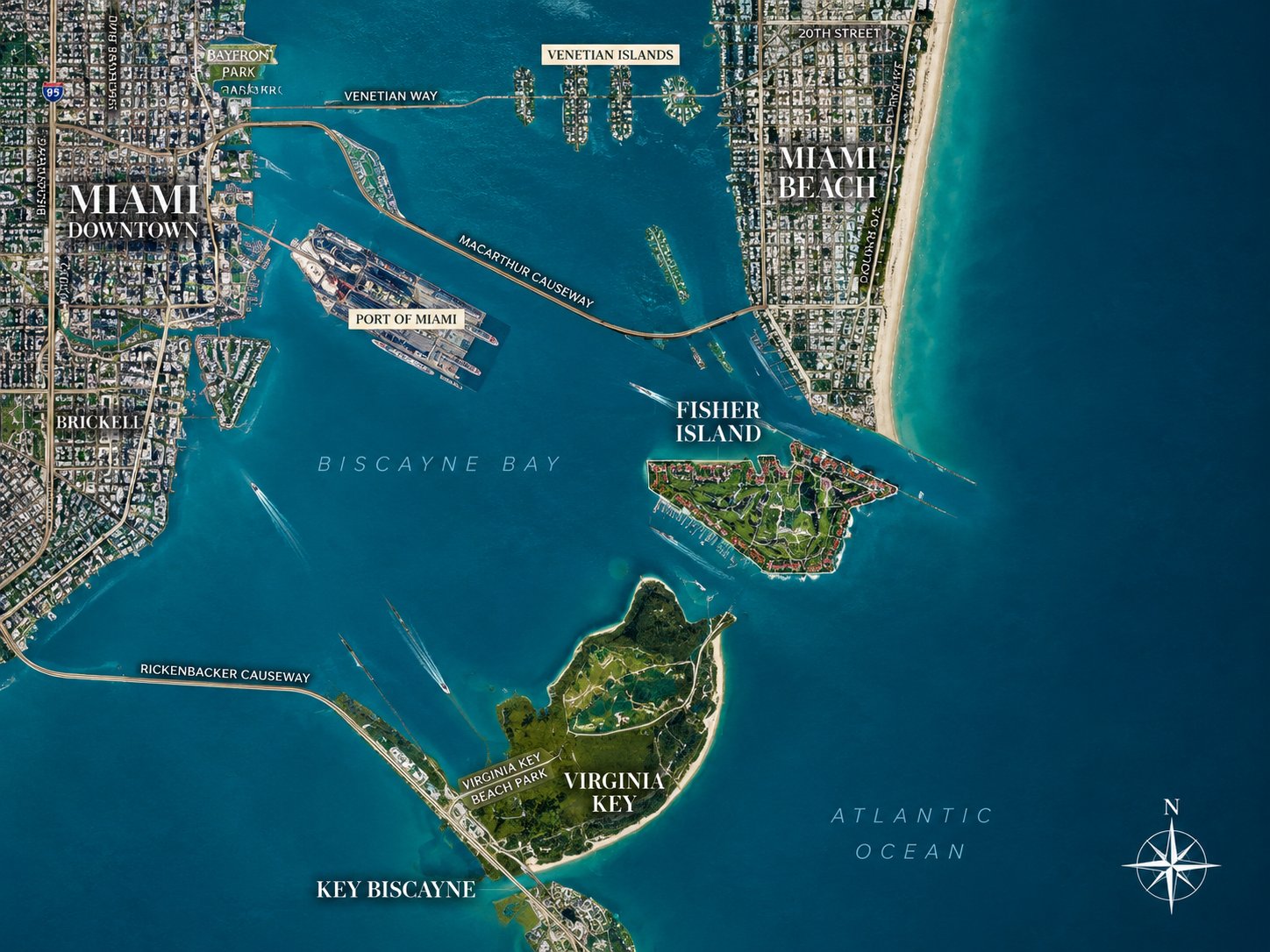
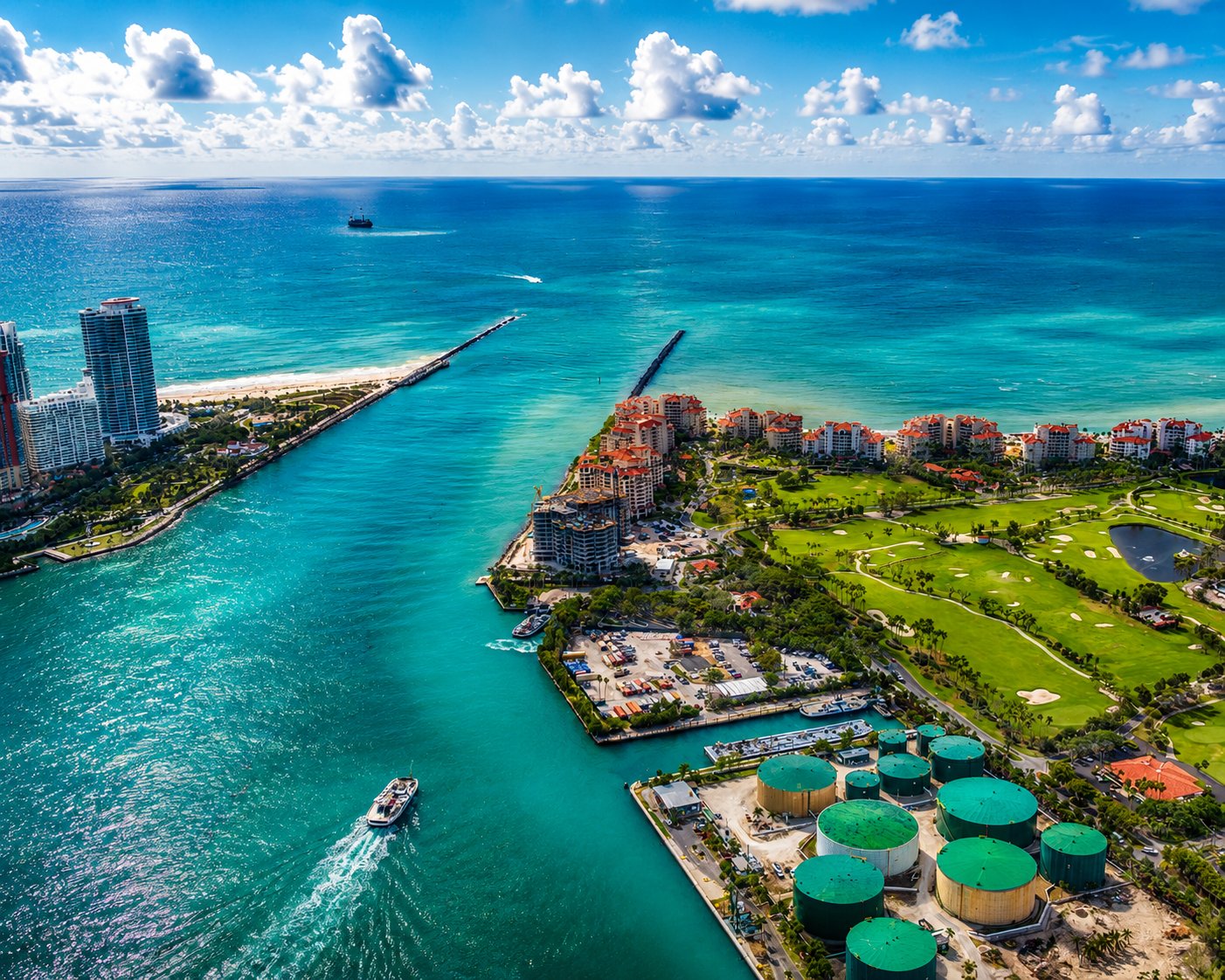
In June 2026, the Miami-Dade County Commission voted to pursue eminent domain to acquire the fuel terminal on Fisher Island that supplies PortMiami, after the county declined to buy the same property when it was openly for sale and then walked away from a four hundred million dollar repurchase. The headline reads like a clash between government and a few wealthy residents. It is not. The Fisher Island fuel depot is a case study in what happens when a fast growing region allows critical infrastructure and luxury development to collide on the same scarce piece of land. For investors, developers, and property owners across South Florida, the lesson is direct. Infrastructure adjacency, governance risk, and structural land scarcity are now primary drivers of value, not footnotes. Below I explain what actually happened, why it matters far beyond one island, and how to think about the precedent it may set across the region.
01What actually happened
Fisher Island is one of the most exclusive addresses in the country, yet it also hosts a working industrial asset, a roughly 10-acre fuel terminal that has supplied PortMiami for decades. In 2025, a Chicago-based developer purchased the site for about 180 million dollars, intending to demolish the fuel bunker, remediate the land, and replace it with high-rise luxury condominiums, while conveying four acres to the Fisher Island Community Association.
The county then realized it could not easily live without the facility, and attempted to buy it back. Negotiations to acquire the site for around 400 million dollars ended this June, with the administration concluding the price was too high, even though the funding was structured to come from port fees rather than tax dollars. With talks closed, the Commission authorized condemnation to move forward. The single detail that should hold your attention is this. The county had a chance to buy the same property at roughly half of today's number when it was on the market, and passed. This is not a scandal to me. It is a lesson.
02Why this matters far beyond Fisher Island
A single fuel depot does not normally command this level of public force. This one does, because it is not really a fuel depot. It is the on-site fuel source for a port that generates more than 61 billion dollars in annual economic impact and supports over 340,000 jobs, with barges carrying fuel directly to ships. County officials estimate that building a replacement could take roughly a decade and cost between 700 million and 1.1 billion dollars, while the current fuel operations agreement expires in 2027.
When a region cannot quickly reproduce a piece of infrastructure, that infrastructure stops being negotiable. It becomes existential. That is the principle underneath the headline, and it applies far beyond one island.
03The real story is decades of planning, not wealthy homeowners
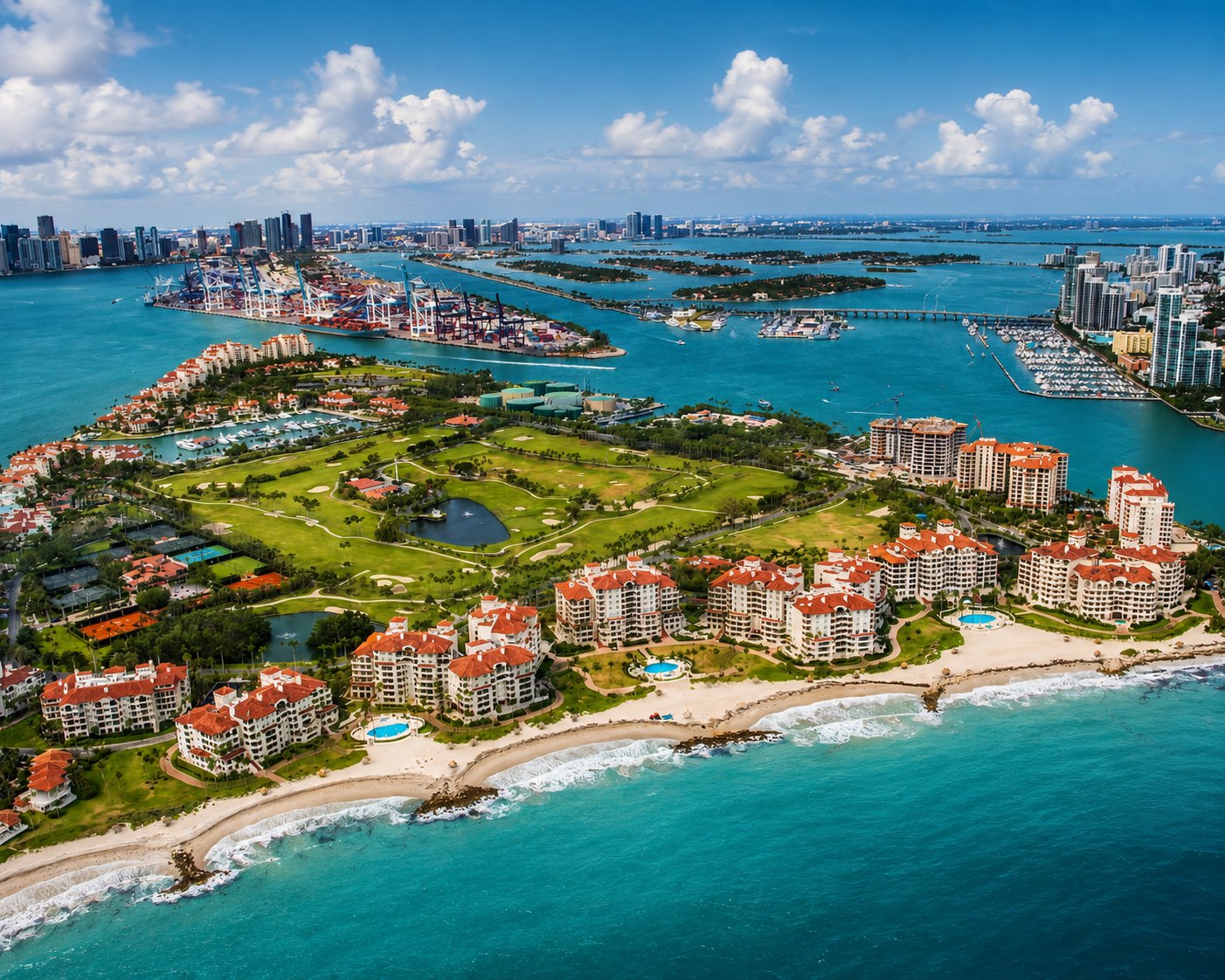
For most of the last century, critical infrastructure was placed where land was cheap and population was thin. South Florida then grew around it. The tank farm did not migrate toward the most valuable real estate in the county. The most valuable real estate grew up around the tank farm. What looks like a fight between residents and industry is, more honestly, the delayed invoice for siting decisions made one and two generations ago, when no one modeled the value of the land that infrastructure would one day occupy.
I want to be clear and fair here. There is no villain in this story. There is a region that grew faster than its long-range planning anticipated, and a market that revalued legacy industrial land so dramatically that its highest and best use became impossible to ignore. That is the condition every coastal growth market eventually faces.
04The risk of essential infrastructure beside residential communities
This episode exposes a structural tension that exists across South Florida and well beyond it. Ports, power, water, and fuel systems are most valuable precisely where people most want to live, near the water, near the urban core, near transit. As residential demand intensifies, the land under essential infrastructure becomes extraordinarily valuable for redevelopment, while the public function it serves becomes harder and more expensive to relocate. The two pressures do not resolve quietly. They resolve through litigation, through condemnation, and through years of uncertainty, which is exactly what is now unfolding here, with the county's authority already being challenged in federal court.
05What this reveals about Miami's growth and land scarcity
We are watching three forces converge that will define Miami's next chapter. First, land scarcity here is structural, not cyclical. On a peninsula bounded by water on one side and the Everglades on the other, the supply of well-located land does not expand. Second, the gap between the current use and the potential use of legacy parcels has become enormous, which is why a fuel terminal becomes a condo site and then becomes a public necessity, all within a few years. Third, governance and entitlement risk have moved to the center of how serious capital underwrites Miami, where they belong.
06The precedent this may set across South Florida
The part the market has not fully priced is the precedent. Whatever the final outcome, every public agency in the region is now watching how this resolves. The likely lesson for them is to identify the next irreplaceable parcel before a developer does. The lesson for capital is more subtle. A property's value is no longer defined only by its zoning, its views, and its comparables. It is increasingly defined by whether the public sector concludes it cannot live without it. Expect more of these conflicts as South Florida continues to densify around aging infrastructure, from working waterfronts to utility corridors to transit-adjacent land.
How investors and property owners should think about this
- Infrastructure adjacency is now a primary underwriting variable. Map the essential systems near any asset, ports, power, water, fuel, transit, before you map the comparables.
- Entitlement and governance risk belong in the model. A clean title does not guarantee a clear path once a parcel becomes a matter of public necessity.
- Scarcity is structural in South Florida. The land does not expand, which means legacy and transitional parcels will only grow in strategic value over time.
- The widest spreads carry the widest risk. The distance between current use and highest potential use is where the largest returns and the largest disputes both live.
- Foresight is the real advantage. The edge goes to those who read the regional system, not just the single address.
Frequently asked questions
What happened with the Fisher Island fuel depot?
In June 2026 the Miami-Dade County Commission voted to pursue eminent domain to acquire the roughly 10-acre fuel terminal on Fisher Island that supplies PortMiami, after negotiations to repurchase it from the developer who bought it in 2025 broke down, and after the county had earlier passed on buying it at a lower price.
Why is the fuel depot so important to PortMiami?
It is the port's on-site fuel source, with barges delivering fuel directly to ships. PortMiami drives more than 61 billion dollars in annual economic impact and supports over 340,000 jobs. A replacement could take roughly a decade and cost up to 1.1 billion dollars.
What does this mean for Miami real estate investors?
It confirms that infrastructure adjacency, governance and entitlement risk, and structural land scarcity are now central to value in South Florida. Investors should map essential systems near any asset, model public-necessity risk, and recognize that the spread between current and highest use carries both the greatest upside and the greatest exposure.
Let us think through what this means for your position
Let us stay in the room together.
Katerina Bucciarelli · Preferred Broker