Mediterranean Homes in Coral Gables: What They Are, Why They Hold Value, and What to Inspect Before You Buy

The arches sell the house. The structure decides what it's worth to own.

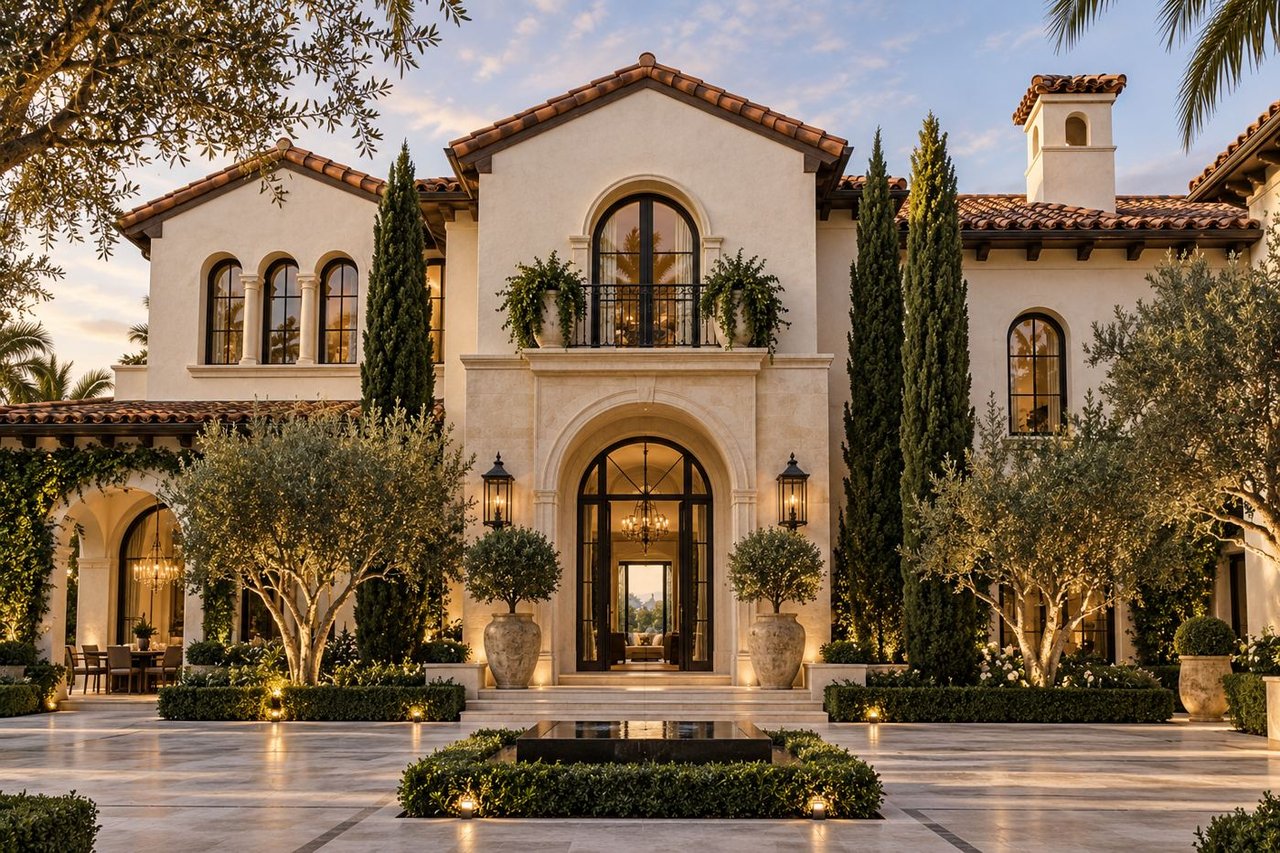
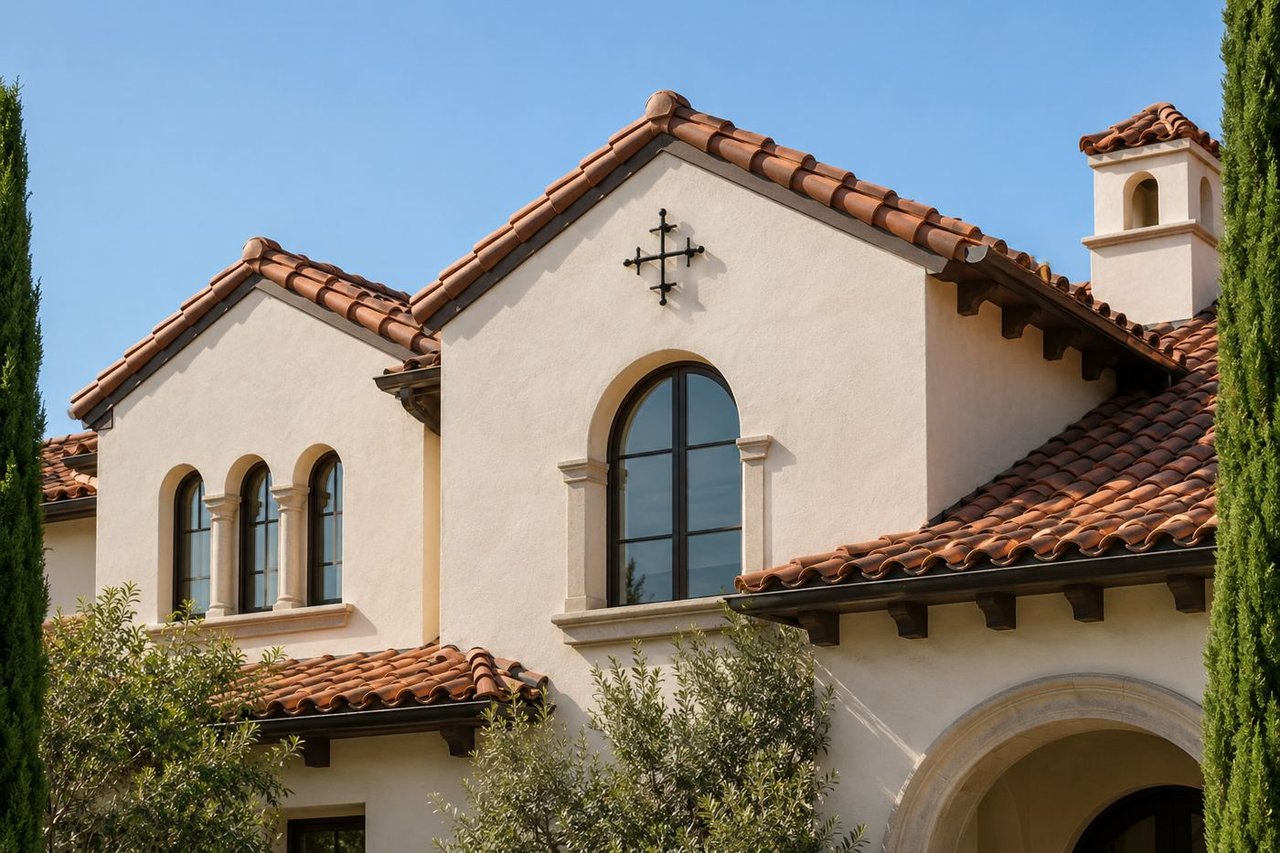
A Mediterranean-style home in Coral Gables is a house in the Mediterranean Revival tradition George Merrick built the city around in the 1920s. You'll recognize it by the stucco walls, the red clay barrel-tile roof, arched doors and windows, wrought iron, and rooms that open onto a courtyard or a loggia. The style borrows from the villas of Spain, Italy, and southern France.

In Coral Gables, the style is also law. The city's Zoning Code defines Coral Gables Mediterranean Architecture, and a Board of Architects that meets every Thursday morning reviews new homes, additions, pools, and even roof tiles. That protection is a big part of why these homes hold their value for generations. The character of the street is defended, and the number of original 1920s houses can't grow.

I read these houses the way I was trained to as a civil engineer, structure first and finish second. The romance is real, and I love it. But the roof system, the walls behind the stucco, and whether that tile meets Miami-Dade's hurricane standards are what decide the long-term return. This page covers both.

The features, and what each one is doing

Every element of a good Mediterranean house has a job in this climate. When I walk one, I look at the feature and then at what it's hiding.

Feature

What you see

What it does in Miami

What I check

Barrel-tile roof

Red clay tiles in curved rows

Sheds heavy rain and shades the roof deck

Age of the last full re-roof, the underlayment, and whether the system is approved for the High-Velocity Hurricane Zone

Stucco over masonry

Smooth or hand-troweled walls in soft colors

Mass that slows heat gain through the day

What's behind it, and whether cracks follow a pattern

Arches and loggias

Covered outdoor rooms and arcades

Shade and cross-ventilation

The beams and columns carrying the load, and water at the base

Courtyard or patio

Rooms wrapped around open space

Light and air into the middle of the house

Drainage and slope away from the walls

Wrought iron

Window grilles, railings, balconies

Security with a lighter look

Rust staining and corroded anchors inside the stucco

Coral rock and limestone

Rough stone at entries, walls, and trim

Local stone, and Merrick's signature

Condition, sealing, and whether past repairs used compatible mortar

Why Coral Gables protects the style

Coral Gables was incorporated on April 29, 1925. Merrick chose the Spanish and Mediterranean look deliberately. In a 1925 New York Times interview, he said it seemed to him "the only way houses should be built down there in those tropical surroundings." He also planned themed villages, Italian, French, Chinese, and Dutch South African among them, to add variety without breaking the whole.

Some of the stone came from very close by. The Venetian Pool on De Soto Boulevard began as the quarry that supplied limestone for early Coral Gables homes, and it opened as a pool in 1924.

The protection has deep roots. Coral Gables was the first municipality in Miami-Dade to pass a historic preservation ordinance, in 1973. Today, the Board of Architects is made up of at least seven local architects, and for a typical permit, its review involves preliminary and final approval before the permit is issued.

The city also pays for the style. Its "Med Bonus" program, in Section 5-200 of the Zoning Code, gives multifamily and mixed-use buildings extra density for Mediterranean design: 0.2 floor area ratio and one additional story at Level 1, and a further 0.3 FAR with one or two more stories at Level 2. The code names the reference buildings architects must study, including the Biltmore Hotel at 1200 Anastasia Avenue, City Hall at 405 Biltmore Way, and La Palma at 116 Alhambra Circle.

My read: this is why I treat a Coral Gables Mediterranean home as an investment first. When a city rewards developers for building in the style, your neighbor's house stays compatible with yours for decades. The trade-off is time. Any exterior change goes through design review, so when I underwrite a renovation, I build the Board of Architects calendar into the schedule and the budget from day one.

Original 1920s home or new Mediterranean build

Both can be excellent. They're different assets, and they ask different questions of a buyer.

Original 1920s home

New or recent Mediterranean build

Character

Irreplaceable. Hand-built details, coral rock, the patina of a century

The style, with modern ceiling heights, layouts, and systems

Structure

Built long before today's wind codes. Wall construction and past alterations need verifying

Designed to the current Florida Building Code, including High-Velocity Hurricane Zone rules

Roof

Only as good as the last full re-roof. Get the permit date

Newer system, but still confirm the product approvals

Windows and doors

Original openings are rarely impact-rated unless replaced. Arched custom units usually cost more

Typically impact-rated from the start

Approvals

Board of Architects review for exterior work, plus historic review if the property is designated

Board of Architects review for exterior changes

Insurance

Roof age and wind mitigation drive the premium and even eligibility

Generally easier, because roof age and openings work in your favor

Best for

A buyer who values scarcity and will plan a proper restoration

A buyer who wants the look without the restoration timeline

What I inspect before an offer, ranked by what it costs if you miss it

This is where an engineering background earns its keep. A general home inspection is where I begin. These are the six questions I work through with clients on every Mediterranean house, starting with the most expensive surprise.

On a walkthrough of a Mediterranean home here in the Gables, my buyer was taken with the original architecture. I was looking up, at the roofline. When was it last replaced? How was it permitted? What's left beneath those beautiful clay tiles? In these homes, the detail you can't see can matter just as much as the facade you fall in love with.

The roof system

Miami-Dade and Broward sit inside Florida's High-Velocity Hurricane Zone, the strictest part of the state building code, and roofing products used there must carry approval for that zone. Clay tile is heavy, the underlayment beneath it does much of the waterproofing, and replacing a full tile roof on a large house is a serious line item. My team currently budgets about $55,000 to $95,000 for a full clay-tile re-roof on a typical Coral Gables Mediterranean house.

Roof age also reaches straight into insurance. Under Florida Statute 627.7011(5), an insurer can't refuse to issue or renew a homeowner's policy solely because of roof age if the roof is under 15 years old. At 15 years or more, the owner can get an inspection, and if it shows at least five years of useful life left, the insurer can't refuse on age alone. A 2026 bill to revise those rules, SB 808, died in committee on March 13, 2026, so the current statute stands.

My read: roof age belongs in the price. I ask for the permit date of the last full re-roof before we talk numbers.

What's behind the stucco

Stucco is a skin. I want to know what it covers, because different wall systems age differently and repair differently. Hairline map cracking is usually cosmetic. Diagonal cracks running from the corners of windows and doors, or cracks that reopen after patching, deserve a structural engineer's opinion before the inspection period ends.

Windows and doors

Arched openings are the soul of the style and the hardest part to protect. If the openings aren't impact-rated, I price either approved shutters or custom impact units. We currently budget about $2,500 to $5,000 per opening for custom arched impact windows. Custom shapes take longer to order, which matters for your first hurricane season in the house.

Permit history

A century-old house has usually been changed many times. A loggia enclosed years ago to make a family room is a pattern I look for, and I want a closed permit for every addition. Open or missing permits become your problem at closing, and they can slow the next sale.

Historic status and design review

Before a client falls in love with a plan for the facade, I confirm with the city whether the property is locally designated. Designation can add a review layer on top of the Board of Architects. Neither is a reason to walk away. Both belong in the schedule.

Water

Courtyards, low patios, and flat roof sections behind parapet walls are beautiful and unforgiving. I check where water goes in a heavy rain, whether the grade slopes away from the walls, and whether the drains and scuppers are clear and sized for our storms.

Budget ranges above are an Innovatio Realty Group planning estimate dated September 28, 2026. They're preliminary planning ranges, not contractor quotations, and architecturally complex, oversized, or historically sensitive conditions can run materially higher.

When a house needs work, my team handles renovation in-house, so the numbers we run before the offer are the numbers we build to. You can see how that works on From Vision to Address.
Market snapshot: Coral Gables, three months ending August 2026

  • Median sale price, all home types: $1,399,074, up 7.4% year over year

  • Median price per square foot: $764, down 5.9% year over year

  • Days on market: 98, compared with 78 a year earlier

  • Sale-to-list price, August 2026: 94.3%

  • Homes sold in August 2026: 161, compared with 151 in August 2025

Source: Redfin Coral Gables housing market data, three months ending August 2026, accessed September 28, 2026. Figures cover all home types, including condominiums, and are not specific to Mediterranean single-family homes. Redfin's figures can be revised as late sales are recorded.

The signals are mixed, and I'd rather say that plainly. The median price rose 7.4% while price per square foot fell 5.9%. When those two move in opposite directions, a different mix of homes usually sold, so I don't treat either one as a clean read on values. What's clearer is pace. More homes closed than a year ago, but they took about three weeks longer to sell, and the typical sale closed close to 6% under the asking price.

My read, and it's an interpretation, not a data point: when days on market rise, buyers have time to price the work. That widens the gap between a restored Mediterranean house and one that still needs its roof and openings done. For a buyer, that's negotiating room on the second kind. For a seller, it's the strongest argument for doing the right work before listing.

Frequently asked questions

A home that borrows from the villas of Spain, Italy, and southern France: stucco walls, red clay barrel-tile roofs, arched doorways and windows, wrought iron, and rooms organized around courtyards and loggias. In Coral Gables, the style dates to George Merrick's plan for the city in the 1920s.

Merrick built the city around the style, and the city still protects it. The Zoning Code defines Coral Gables Mediterranean Architecture, and the Board of Architects reviews new residences, additions, and roof tiles.

The Board of Architects reviews roof tiles, and in Miami-Dade, roofing products must be approved for the High-Velocity Hurricane Zone. Confirm the current requirements with the City of Coral Gables before you plan the work.

Yes. Under Florida Statute 627.7011(5), an insurer can't refuse to issue or renew a homeowner's policy solely because of roof age if the roof is under 15 years old. At 15 years or more, an inspection showing at least five years of remaining useful life protects the policy from an age-only refusal.

Yes. New residences go through the Board of Architects, which typically gives preliminary and final approval before the building permit is issued.

If you're considering a Mediterranean house in the Gables and want a second set of eyes on the structure before the romance takes over, I'd be glad to walk it with you.

Katerina Bucciarelli

Coral Gables real estate specialist and Broker-Owner, Innovatio Realty Group. Licensed real estate broker in Florida, New York, and New Jersey, with more than 18 years of experience. Civil engineering training at UNIMET. NYU studies in the development process and real estate finance. CRS, SRS, RENE, ABR, e-PRO, CLHMS. English, Spanish, and Italian.

3850 Bird Road, Suite 403-A, Coral Gables, FL 33146. [email protected]. +1 646 217-1011.

Sources

  1. City of Coral Gables, Board of Architects: Mediterranean Design (Med Bonus, Sections 5-200 and 5-202). coralgables.com, accessed September 28, 2026.

  2. City of Coral Gables, Board of Architects: membership, weekly review scope, and approval process. coralgables.com, accessed September 28, 2026.

  3. Florida Statutes, Section 627.7011(5). flsenate.gov, accessed September 28, 2026.

  4. Florida Senate, SB 808 (2026), Roofing Requirements for Property Insurance. Died in Banking and Insurance, March 13, 2026. flsenate.gov and LegiScan.

  5. Miami-Dade County, Product Control Section, Notices of Acceptance for the High-Velocity Hurricane Zone of the Florida Building Code. miamidade.gov.

  6. Innovatio Realty Group, planning estimate for clay-tile re-roofs and custom arched impact windows in Coral Gables, September 28, 2026.

  7. Redfin, Coral Gables, FL housing market, three months ending August 2026. redfin.com, accessed September 28, 2026.

  8. Historical Association of Southern Florida and Coral Gables Junior Woman's Club, Venetian Pool historical marker. HMdb.org.

  9. City of Coral Gables, Preserving Our Past: the city's 1973 historic preservation ordinance. coralgables.com, which states the city was the first in Dade County to enact preservation legislation.

  10. George E. Merrick, interview with The New York Times, March 1925, as cited in the University of Miami Libraries record of Merrick's papers.

Follow Us on Instagram